

Settler Colonialism: Politicized, Ahistorical, Dangerous
Settler Colonialism: Politicized, Ahistorical, Dangerous
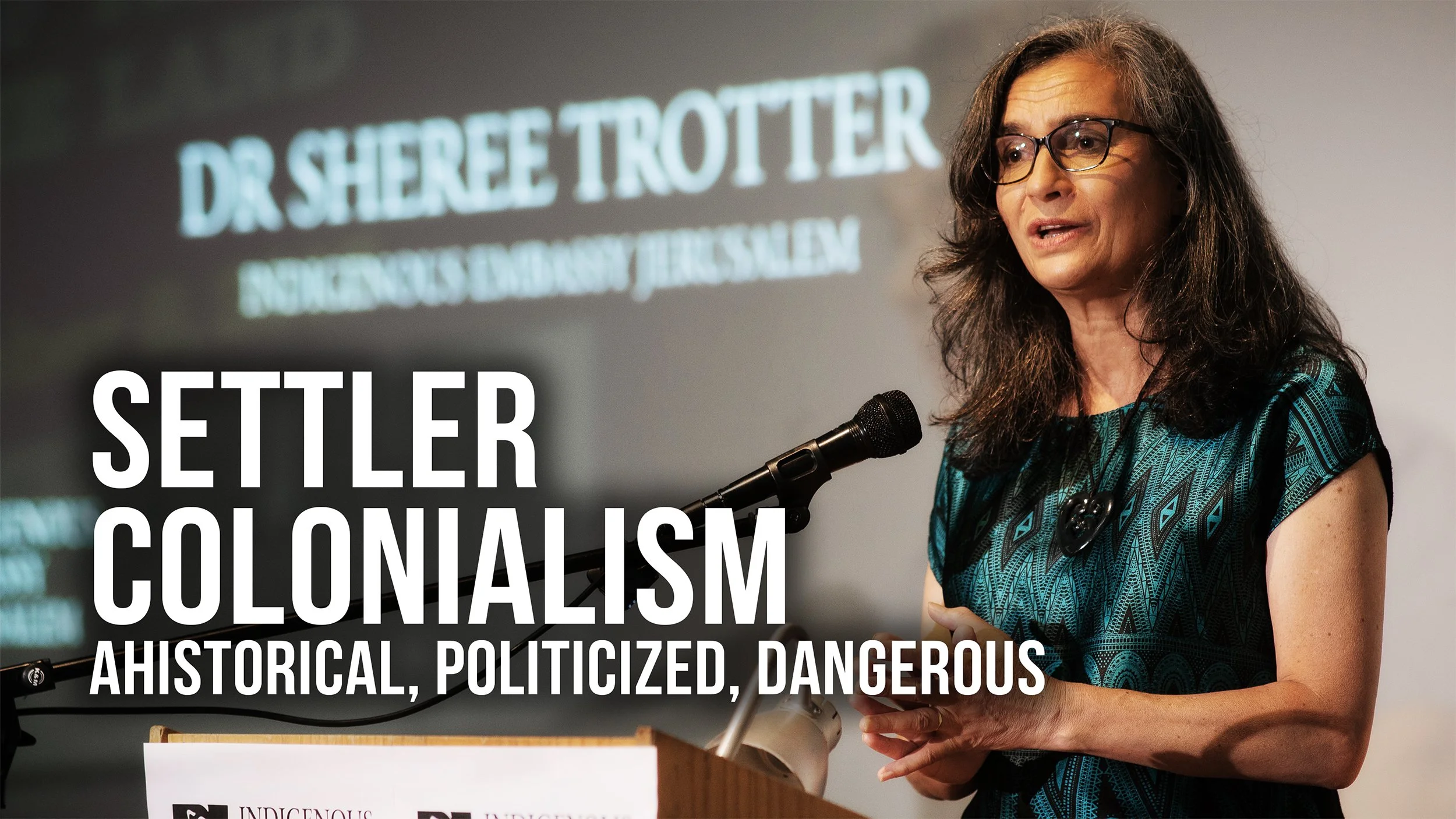
The following is an abridged form of the lecture, first published on Times of Israel
Recently, the British Society for Middle Eastern Studies imposed a policy mandating territorial land acknowledgements for academics wishing to submit articles to their journal, or participate in the annual conference, or who work or study at an institution located on “land appropriated from Indigenous peoples by settler colonial regimes.”
This is but one example of the problematic nature of academia’s embrace of decolonization, in which performativity appears to take priority over intellectual debate and rigour. Building on the claim of historian Patrick Wolfe, that Settler Colonialism is a persistent structure, not simply a historical event, academic institutions have adopted symbolic acts, which do little for the Indigenous peoples themselves, but are seen as “critical ethical and political gestures” to address a perceived problem of “power dynamics in knowledge production.”
As I have argued elsewhere, Settler Colonialism, as an interpretive model, in both its methodological form and its contemporary political deployment, is deeply flawed. Its presentist orientation, its selective use of historical material, and its rigid interpretive categories produce not clarity, but distortion. The theory’s tendency to collapse complex historical narratives into a stark moral binary renders it not only analytically inadequate, but ethically fraught. In its most militant contemporary applications, the framework fuels resentment, encourages rhetorical and political extremism, and narrows the possibilities for reconciliation and coexistence.
In critiquing Settler Colonialism, I do not seek to minimize the painful histories of Indigenous peoples, including my own. The loss of land, broken treaties, massacres, subjugation, and disruption of a way of life have created disparities, disadvantages and ongoing trauma. My goal, however, is to highlight some of the problems with Settler Colonialism as an ideological framework.
In many ways, Settler Colonialism functions like a religious cult replete with hermeneutical tools, original sin, state of innocence, saints and sinners, commandments, and penance. Notably absent, though, are hope and redemption. Ritual acts like land acknowledgements can function to absolve the conscience of the penitent but provide little substantial change for the so-called colonized. Those who choose not to comply are transgressors whose fate is to be shunned, canceled and silenced, or worse. All non-indigenous peoples in so-called settler colonialist states are implicated in the sins of their nation’s past.
The concept of power operates as a central hermeneutical category for understanding Settler Colonialism. Foucault’s influence is evident in the settler colonialist contention that colonial systems produce knowledge about Indigenous peoples in ways that justify domination and erasure.
Settler Colonialism’s original sin as articulated by Wolfe is the act of invasion. Wolfe argues that invasion is not an event, but “a structure” — meaning the ongoing system of relationships, laws, and institutions that continually reproduce and sustain settler dominance. Invasion doesn’t end when the settlers settle; Settler Colonialism postulates that the logic of elimination continues through the structures, institutions and policies of the governing entity.
Settler Colonialism appears to assume that prior to invasion, the indigenous world was paradise, with Indigenous Peoples living in a utopian state of innocence. The “native” is romanticised and essentialised as a “noble savage.” Indigenous culture is idealized and frozen in time in a state of near perfection. The reality of intertribal warfare, and in some cases, cannibalism, slavery and infanticide, are ignored. The indigenous-settler relationship is an essential component and defining feature of Settler Colonialism. The constitutive nature of this relationship in the definition of Settler Colonialism has therefore created a built-in and undeclared exemption structure that absolves Indigenous on Indigenous conflict and transgression. In other words, when an Indigenous people carries out the same acts of domination against another Indigenous people, it is irrelevant to settler colonial theory, because it does not involve settlers.
Settler colonial ideology’s binary logic produces saints and sinners, the colonizer and colonized, and such categories are usually fixed. Complexity is ignored and agency denied. Indigenous peoples who embrace new ideas, technologies and practices are rejected as having adopted a colonizer’s mindset. New immigrants, often impoverished and powerless, are lumped into the category of powerful evil settlers. Indeed, the term “settler” is framed as an accusation and is necessarily pejorative.
“The West,” and all that it represents, is thus implicated as guilty of the crime of colonialism, with the only correct response being to decry, reject and undermine the system. Settler Colonialism accuses Western imperialism of producing the colonized mind, resulting in a colonized health system, scientific establishment, legal system, and government structures. Ironically, many of the most dominant proponents of these ideas are themselves educated in “colonized” Western universities or serve in “colonized” Western parliaments or law courts. Settler Colonialism has developed a moral code by which devotees and institutions may seek righteousness. Acts of penance are devised to absolve guilt.
Another major flaw of Settler Colonialism is the way in which it ignores the agency of the Indigenous people. In the case of Indigenous Māori of New Zealand, the response to the changes settlers brought into the country was mixed. Many Māori embraced new ideas, technologies and modernity. Their embrace of literacy was such that in 1840-1850 literacy was greater among Māori than among the settlers. When the new settler government asserted control and breached treaty obligations, Māori fought back in a variety of ways, and engaged in the political process.
In the case of Israel, Settler Colonialism paints a one-sided model of Israeli domination while ignoring the realities of a mixed society and the many attempts to pursue peace with Arab neighbors. Multiple offers of land for peace contradict the framing of Israelis as land-hungry settlers. The intransigence and maximalism of the Palestinians is ignored, as well as the challenges posed by radical Islamist ideologies and their outworking.
Settler Colonialism theorists have anointed Israel as the archetypal transgressor state, even though its unique historical roots and trajectory, demographic composition, and ideological foundations complicate its classification within the orthodox parameters of settler colonial theory. Settler Colonialism itself does not purport to be more than an analytic tool. However, the theory has energized anti-Israel activists and fuelled the rising tide of antisemitism since October 7. Revolution is inherent in its tenet that the structures of the settler colonialist project must be dismantled.
For proponents, it has provided moral justification for Jew hatred. Slogans such as “75 years of colonialist oppression” and “If Palestine is not free, neither are we” have fuelled anger and incited violence against Jews. Settler colonial theory has enabled and justified the proliferation of libelous claims against Israel. The point is to accuse, to assign guilt and ultimately to destroy the Jewish state. For many, Palestine has become a symbol for all the injustice in the world, and oppressed groups have embraced the cause as their own. The world is looking for a scapegoat and the Jewish state, it appears, fills that role, just as diasporic Jews have done for centuries.
Settler Colonialism is a relatively recent field of enquiry. In an age of grievance, Settler Colonialism’s political framing of history has created a distorted view of the world. The idea that settlement is not simply a historical act, but an ongoing transgressive act to be corrected, adds a revolutionary impetus which becomes particularly problematic when applied to the already inflamed Israel-Palestinian situation. The murder of Yaron Lischinsky and Sarah Milgrim on the streets of Washington, DC, could arguably be seen as but one example of the pernicious effects of the propagation of Settler Colonialism’s framing of Israel as an intruder, a foreign colonizing force oppressing the so-called Indigenous people. I would argue that it’s time for a post-settler-colonial model to emerge — one that shifts away from presentist, politicised treatments of history, which serve only to fuel anger, keeping the so-called “colonized” locked in a cycle of grievance. It provides little hope for the future.