

Indigenous Zionism at Concordia University

By Emeritus Professor Avi Bareli
First Published by Israel HaYom
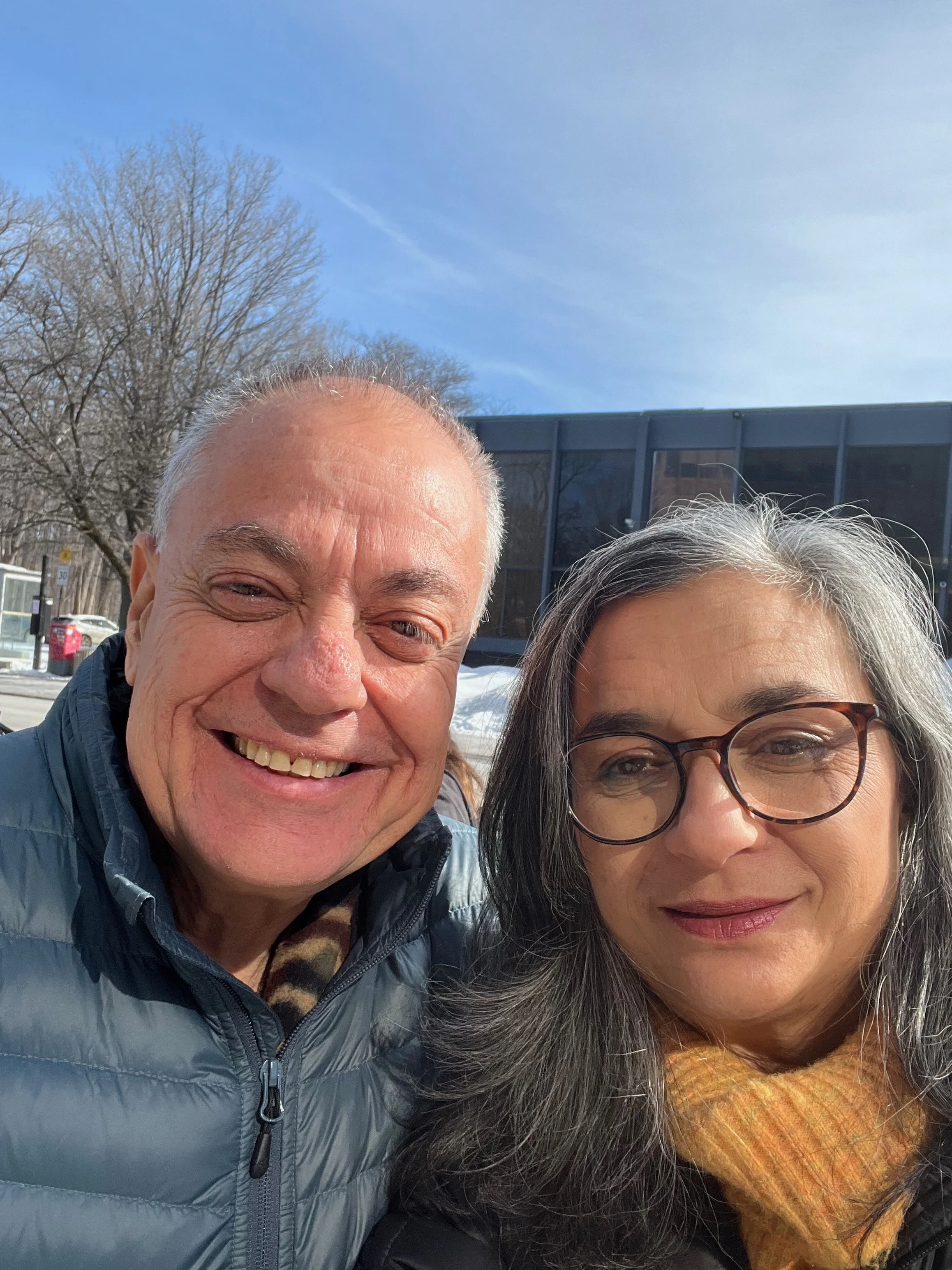
Emeritus Prof Avi Bareli and Dr Trotter
Some time ago, scholars gathered in Montreal, Canada, to discuss “Jewish conceptions of indigeneity in Zionist thought”—that is, Zionist indigeneity and its Jewish roots (rather than the fabricated indigeneity of supposed “non-Jewish Israelis” or various “Canaanites”). They discussed the genuine indigeneity of a continuous and ancient Jewish people that was uprooted, exiled, and returned twice; a people that, until its return, maintained for centuries an indigenous attachment to the Land of Israel—like other indigenous peoples who survived and aspire to return.
The conference took place shortly before the attack on Iran and was hosted at the Azrieli Institute of Israel Studies at Concordia University in Canada. Scholars from Bar-Ilan University, from the Azrieli Center for Israel Studies at Ben-Gurion University of the Negev (myself among them), and from the University of Haifa also participated.
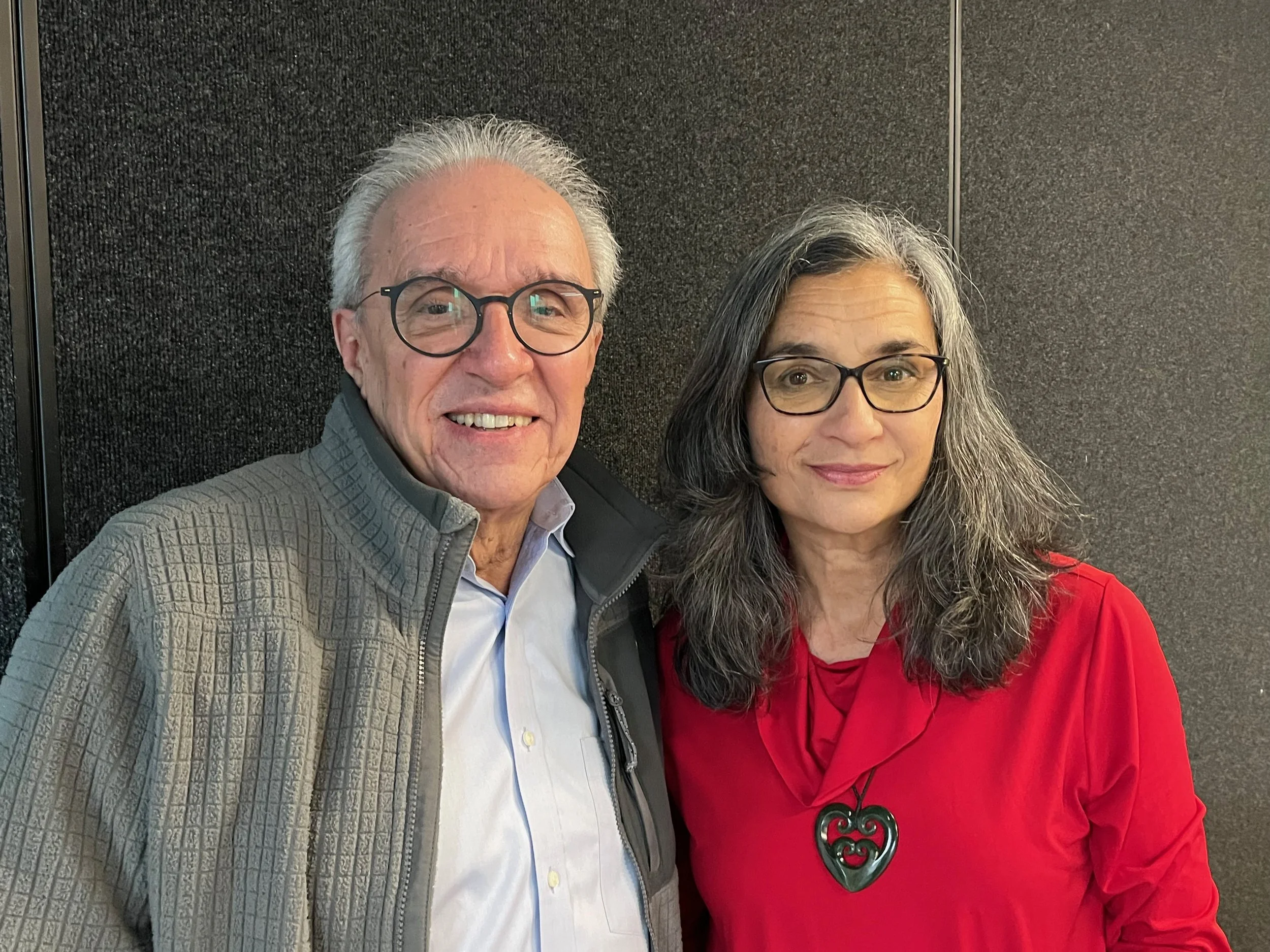
Justice LaForme and Dr Trotter
The background to the conference was the public prominence in Canada of the claims of the “First Nations” (“Indian tribes,” as they are unfortunately called), which seek to renew their ownership of their ancestral lands and to free themselves from the imposed arrangements of reservations. An important speaker at the gathering was Justice Harry S. LaForme, a former judge of the Federal Court of Appeal of Canada and a member of a First Nation located between Quebec and Ontario in the heart of Canada. Another prominent speaker was Dr. Sheree Trotter, a member of one of the Māori tribes of New Zealand and a scholar of the Zionist movement in her country.
The conference was kept confidential. This was unavoidable, given the risk of violence in the currently toxic atmosphere toward Israel in Canada. Its political context was, of course, Israel’s war against the Islamist imperialism of Iran and the antisemitic falsehoods voiced by figures such as the American right-wing broadcaster Tucker Carlson. These attacks often rely on crude claims advanced by “left-wing” historians such as Professor Shlomo Sand and his Marxist or liberal predecessors. They are firmly rooted in an older eliminatory stance within the Christian and Muslim civilizations—both historically derived from the Jewish people—in which attempts to deny the continuous existence of the Jewish people and its continuous attachment to the Land of Israel have long been widespread and remain so today.
In Muslim discourse, the denial of Jewish indigeneity is expressed through a false distinction between the “Children of Israel” mentioned in the Qur’an—supposedly a people that no longer exists—and the “Jews,” portrayed as a heterogeneous crowd falsely claiming to be their descendants and therefore, according to “spiritual” leaders such as Iran’s Ali Khamenei, deserving of annihilation. In Christian discourse, the denial appears in the claim that the Church replaced the people of Israel, who were condemned either to extinction or to eternal exile.
Yet the more important story concerns the ambivalent attitude that too many Israelis display toward our own foundational indigenous connection to the Land of Israel. Within our society one can detect an embarrassing tendency to stammer when speaking of our indigeneity—or even to adopt, in part, its denial.
One evening we met with a worried but determined and proud group from McGill and Concordia Universities. It was difficult to hear their descriptions of the harassment of Jewish students in Canadian academia, where boycott threats are used to pressure them into issuing statements distancing themselves from Israel. We tried to encourage them and suggest ways of coping.
Yet it was not we but Justice LaForme and Dr. Trotter who asked them why they did not reply to their persecutors that the Land of Israel is the homeland of the Jewish people and that the Jews are an indigenous people who returned to their homeland—a people whose culture, and indeed religion, are unique and vital to humanity as a whole and can exist fully only in their own land. Dr. Trotter added that even before the Jews returned, they could sustain their identity only on the basis of the hope of returning to the land (that is, their identity was inherently indigenous). One lecturer from McGill replied that they feared being accused of dual loyalty. Yet many Israelis themselves hesitate to declare their own indigenous identity—an identity that is not dual but centered on the connection to the Land of Israel. To them it may seem like an empty rhetorical flourish.
This was not the attitude of the founders of our society. For some reason, many of their heirs tacitly prefer quasi-Canaanite conceptions and foreign passports. This amounts to a form of self-denial. LaForme and Trotter are right: it is impossible to understand what the State of Israel was founded upon, and what sustains it today, without taking into account the indigenous sources of its strength. Our modern history has revealed that, as a people, we cannot truly live anywhere except in the Land of Israel.
Professor AVI BARELI (emeritus) is a former director of the Ben-Gurion research Institute, Ben Gurion University in the Negev. He specializes in the political history of Israel and Zionism. He is the editor of the Hebrew peer-review journal Iyunim: Multidisciplinary Studies in Israeli and Modern Jewish Society. His Book, The Academic Middle-Class Rebellion, written with Uri Cohen, was published in 2022 (Hebrew) and 2017 (English), and won the Lorch Award for 2023. His book, Authority and Participation in a New Democracy, was published in 2014. His Book, Mapai in Israel’s Early Independence, 1948–1953, received the Ben Zvi Prize in 2008. In 2011 his book, Israeli Republicanism, written with Nir Kedar, was published by the Israel Democracy Institute.